On 28 July 2026, Vincent Belorgey was found dead at his Paris home at the age of 50, three days before his birthday. The world learned the news under another name: Kavinsky. Tributes poured in within hours, from the French President to The Weeknd, and his track Nightcall immediately climbed back up the streaming charts. If a blog devoted to the French language and civilisation pauses on an electronic music producer, it is because his story says something essential: French culture does not live only in libraries. It also drives at night, in a Ferrari Testarossa, on a line of synthesizers.
Key facts
- Kavinsky, born Vincent Belorgey on 31 July 1975 in Paris, died in Paris on 28 July 2026, at 50.
- His track Nightcall (2010), produced with Guy-Manuel de Homem-Christo of Daft Punk, became world famous as the opening song of the film Drive (2011).
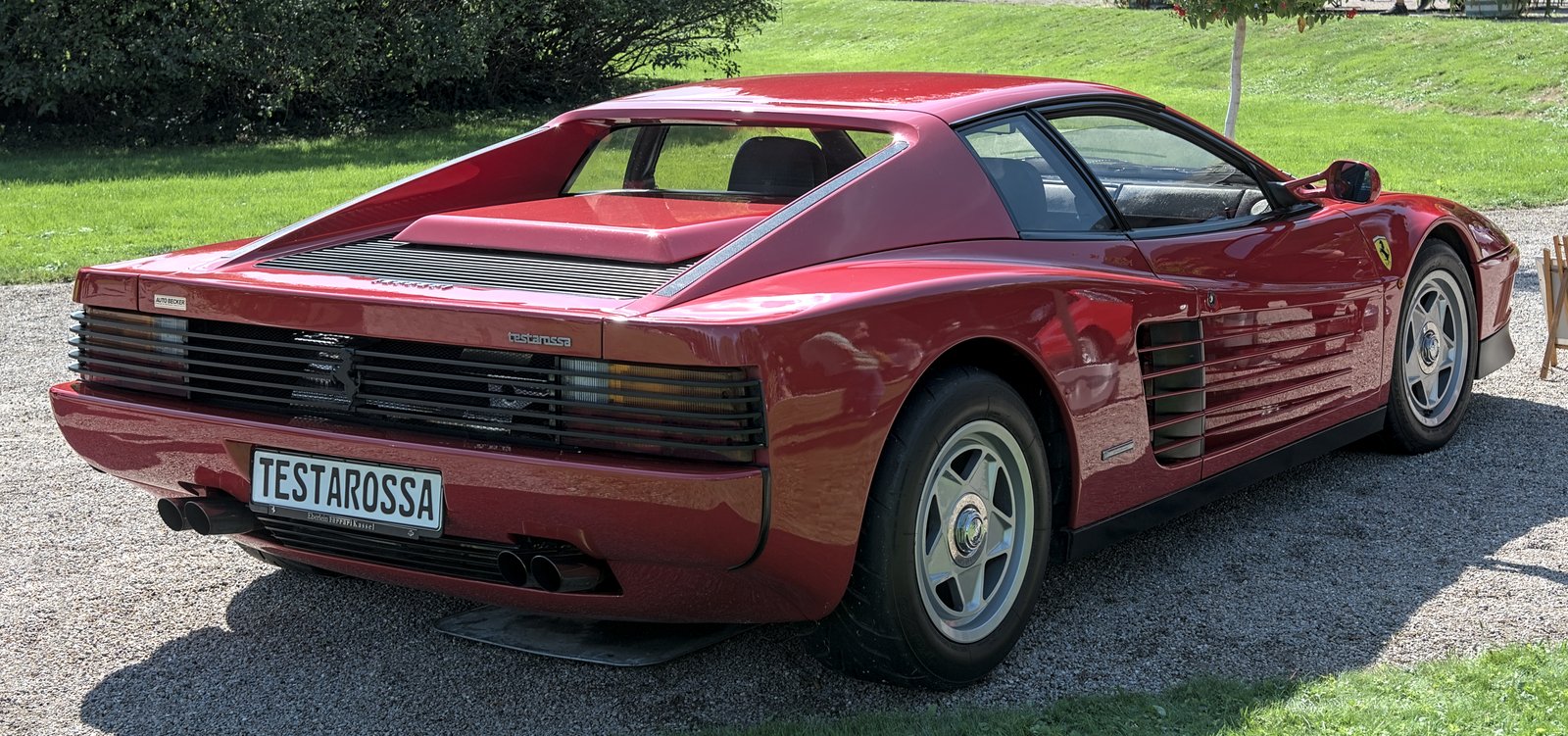
- His persona: a driver who crashed his Ferrari Testarossa in 1986 and came back as a zombie, twenty years later, to make electronic music.
- On 11 August 2024 he performed Nightcall with Angèle and Phoenix at the closing ceremony of the Paris Olympics, breaking two world records on Shazam.
- He embodied the second generation of the French Touch, the French electronic music movement born in the 1990s around Daft Punk and Air, one of France’s great cultural exports.
A character straight out of a film: who was Kavinsky?
Vincent Belorgey was born on 31 July 1975 in Paris. Before music came cinema: as a teenager he met the future director Quentin Dupieux, who cast him in Nonfilm and later in Steak. In 2005 he invented a character the way one writes a screenplay: Kavinsky, a young man who died at the wheel of his Ferrari Testarossa in 1986 and reappeared in 2006 as a zombie, making the music of his former life. Red varsity jacket with a K, black sunglasses, a motionless figure behind the machines: the mask never came off.
His first EP, Teddy Boy (2005), released on the independent label Record Makers, already contained Testarossa Autodrive, an entire programme in one title. The whole universe was there: a fantasised 1980s, video games (his album OutRun takes its name from a 1986 arcade game), American night movies and that red car whose side strakes became his coat of arms.
Nightcall: three minutes heard around the world
In March 2010 came Nightcall, produced with Guy-Manuel de Homem-Christo, one half of Daft Punk, and carried by the voice of Lovefoxxx, singer of the Brazilian band CSS. A vocoded male voice, half human, half machine, converses with a female voice: the song literally tells of a monster phoning the woman he loves at night to show her “something else”.
The following year, director Nicolas Winding Refn opened Drive, starring Ryan Gosling, with those three minutes. The film became a cult classic, and so did the track. Here lies the founding paradox: a song sung in English by a Brazilian, produced in Paris by two Frenchmen, that the whole world instantly identifies as a French sound. The French Touch fits entirely inside that paradox: the accent is not in the words, it is in the sound.
The French Touch, a French story
The French Touch is the electronic music movement born in France in the mid-1990s: Daft Punk (Homework, 1997), Air (Moon Safari, 1998), Cassius, Étienne de Crécy, St Germain. Its signature: filtered disco and funk samples, a melancholy that dances, tracks built like songs. It was the English-speaking press that named the movement, and the name says it all: the world recognised a French “touch” before France even claimed it.
A second generation emerged in the 2000s around the Ed Banger label founded by Pedro Winter: Justice, SebastiAn, Breakbot, DJ Mehdi. Kavinsky grew up in that scene, shared its stages and its Paris nights, then wrote a chapter of his own: synthwave, a music that takes 1980s nostalgia as its raw material. On the album OutRun (2013), the track Rampage opens with a sample of Shunsuke Kikuchi’s score for Dragon Ball Z, a wink every French child of 1990s television recognises within a second.
It is also the story of a generation learning to count its absent friends: DJ Mehdi in 2011, Philippe Zdar of Cassius in 2019, Daft Punk’s split in 2021, Kavinsky in 2026. What remains are the records, and a sound the world still calls French on every continent.
11 August 2024: apotheosis at the Stade de France
The last great chapter was written at the Paris Olympics. On 11 August 2024, for the closing ceremony, the Stade de France went dark: Angèle appeared on vocals, Phoenix on instruments, Kavinsky on the machines, and Nightcall rose into the night before hundreds of millions of viewers.
French has a precise word for that moment: l’apothéose, from the Greek apotheosis, “becoming a god”. In ancient Rome it was a state ceremony: when an emperor died, the Senate voted his consecration, the pyre burned, an eagle was released to carry his soul, and the people watched the sky for a sign. For Julius Caesar, the sign was a comet, visible over Rome for seven days. French music even turned the apotheosis into a genre: in 1725, François Couperin composed L’Apothéose de Lully, in which the departed musician is welcomed on Parnassus by Apollo. Rome deified its dead emperors; France offered Kavinsky his in his lifetime.
That evening, the celestial omen duly appeared, in its contemporary form: millions of viewers raised their phones at the same time to ask the name of the song. Nightcall became the most Shazamed song in the world in a single day, and 10:50 pm, the minute of the performance, the most Shazamed minute in the app’s history. Caesar’s comet, measured in requests. The studio version recorded with Angèle and Phoenix, released in September 2024, reached number three on the French chart. Fourteen years after its release, the song of Paris nights had become an unofficial national anthem. Two years later, almost to the day, France said goodbye: his funeral was held on 12 August 2026 at the church of Saint-Pierre de Montmartre, before his burial in the Saint-Vincent cemetery on the Butte.
Why the French Touch belongs to French civilisation
French civilisation does not stop at the classics: it also includes what France invents today and what the world borrows back. In that sense, the French Touch is an ideal subject for anyone learning French.
First because it questions language itself: how does a country export a music with almost no French lyrics that the whole world hears as French? Then because it has its places: the Rex Club, the Showcase under the arches of the Pont Alexandre III, and above all the Social Club on rue Montmartre (2008-2016), headquarters of the Ed Banger generation. Those venues belong to Paris cultural life as much as its theatres do.
Finally because it sheds light on a generation. Millennials were the first to grow up with a borrowed nostalgia, that of a 1980s they barely knew, recycled into neon and synthesizers.
One image sums up the misunderstanding: this generation grew up with Blade Runner and ended up with Black Mirror. It was promised a future of neon under the rain and received pocket screens instead. Synthwave grew in that gap, as nostalgia for a future that never came, and Kavinsky’s zombie, frozen in 1986, is its messenger: he arrives straight from the year the promise was still intact. The dates even answer each other: Drive and the first episode of Black Mirror came out the same year, 2011. The dream and the diagnosis.
French literature has a very old name for that feeling: the ubi sunt motif, the “where are they now?” that François Villon had already fixed in 1461 with his “snows of yesteryear”. Kavinsky’s synthwave is, in its own way, a ballad of the ladies of times past played on machines. Five centuries apart, French literature and French electro ask the same question.
That dialogue between yesterday’s culture and today’s is exactly what our French courses in Paris and civilisation lectures explore, from the classics of French literature to popular culture, on site or remotely with our online French courses. Understanding why France mourns a DJ in a red varsity jacket already means understanding France. To find your starting point, see our guide to French language levels from A1 to C2.
Listening to Kavinsky: ten tracks to start with
All links point to the artist’s and his label’s official channels.
- Testarossa Autodrive (2005): the first single, the whole persona in three minutes.
- Nightcall (2010): the classic produced with Guy-Manuel de Homem-Christo, opening theme of Drive.
- ProtoVision (2013): the nervous opener of the album OutRun.
- Odd Look, with The Weeknd (2013): the meeting with global pop.
- Rampage (2013): the Dragon Ball Z sample, a madeleine for a whole French generation.
- Renegade, with Cautious Clay (2021): the comeback single.
- Reborn, with Romuald (2022): the title track of the second album.
- Zenith, with Prudence and Morgan Phalen (2022): the melancholic peak of Reborn.
- Trigger (2022): the most futuristic instrumental on the record.
- Nightcall at the Paris Olympics, with Angèle and Phoenix (2024): the farewell in apotheosis, filmed by France Télévisions.
Frequently asked questions
Who was Kavinsky?
Kavinsky was the stage name of Vincent Belorgey (1975-2026), a French electronic music producer. A figure of the second generation of the French Touch and a pioneer of synthwave, he is world famous for Nightcall (2010), the opening song of the film Drive, and for his albums OutRun (2013) and Reborn (2022).
How did Kavinsky die?
Vincent Belorgey was found dead at his Paris home on 28 July 2026, at 50, three days before his birthday. The Paris prosecutor’s office opened an investigation, which found nothing suspicious; the press has reported a suspected stroke. His funeral took place on 12 August 2026 in Montmartre.
What is the French Touch?
The French Touch is the French electronic music born in the mid-1990s around Daft Punk, Air, Cassius and Étienne de Crécy, recognisable by its filtered disco samples and its danceable melancholy. A second generation, that of the Ed Banger label and Kavinsky, carried the movement through the 2000s and 2010s, all the way to the closing ceremony of the Paris 2024 Olympics.
Why is Nightcall so famous?
Because it lived three lives: a confidential track produced with Daft Punk’s Guy-Manuel de Homem-Christo in 2010, the worldwide opening theme of the film Drive in 2011, then an anthem of the Paris Olympics on 11 August 2024, performed with Angèle and Phoenix, the night it broke two world records on Shazam.