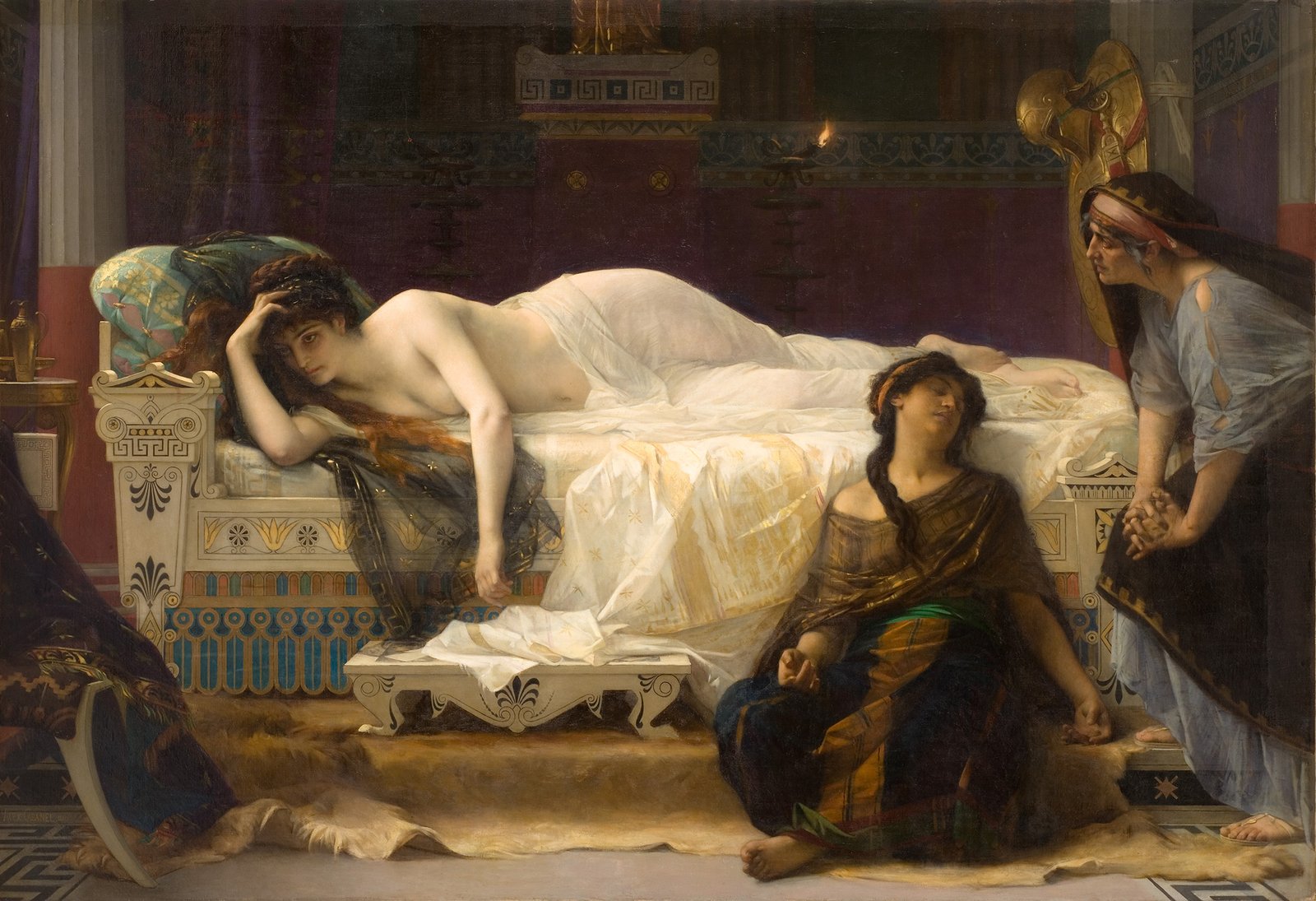
It is one of literature’s most delicious paradoxes: J.R.R. Tolkien, the most English of writers, an Oxford professor who liked to joke about his limited taste for France, built his work on a foundation largely shaped by the French Middle Ages. Chivalric romance, the quest, the Grail, courtly love: all inventions born in the French language in the 12th century, without which neither Middle-earth nor modern fantasy would exist. A journey to the French sources of a supposedly so British universe.
Key facts
- J.R.R. Tolkien (1892-1973), author of The Hobbit (1937) and The Lord of the Rings (1954-1955), was first and foremost a philologist, an Oxford professor specialising in medieval languages and texts.
- In 1925, with E.V. Gordon, he published the standard scholarly edition of Sir Gawain and the Green Knight, the 14th-century English Arthurian masterpiece; his translation appeared posthumously in 1975.
- The Arthurian matter of that poem draws heavily on the French tradition: it was Chrétien de Troyes who, around 1180, invented chivalric romance and brought the Grail into literature.
- The very word “romance” is French: in the 12th century it meant a tale written in the Romance vernacular.
- Critics have often compared Boromir’s horn in The Lord of the Rings with Roland’s olifant: two heroes who sound the call too late, overwhelmed by sheer numbers.
An Oxford philologist who read the Middle Ages in the original
Before he was a novelist, Tolkien was a scholar. Professor of Anglo-Saxon, then of English language and literature at Oxford, he spent his life among medieval texts: Beowulf, whose modern reading his 1936 lecture transformed, the Norse sagas, and the chivalric romances of medieval England. His fiction grew out of that erudition: he invented languages before inventing the peoples who speak them.
His tastes ran to the Germanic north rather than to France, and he made no secret of it. But medieval literature knows nothing of modern borders: it is impossible to work on English chivalry without meeting, everywhere, the French imprint.
Sir Gawain and the Green Knight: the project of a lifetime
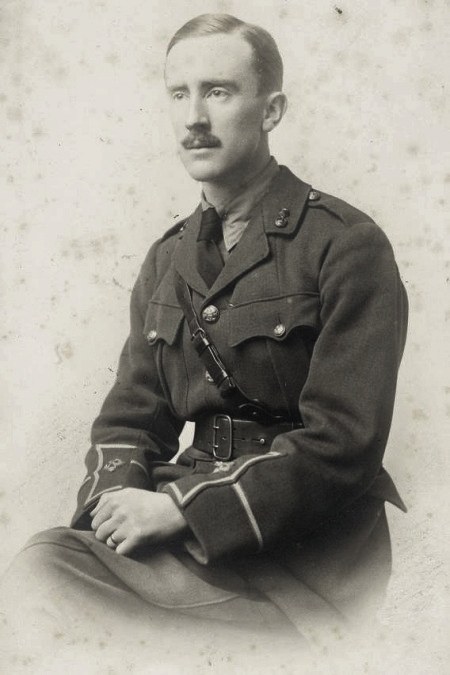
An entirely green knight bursts into King Arthur’s court one New Year’s Eve and proposes a terrible game: let someone cut off his head, on condition of a return blow one year later. Gawain takes up the challenge. This anonymous 14th-century poem, preserved in a single manuscript at the British Library, is one of the summits of medieval English literature, and Tolkien devoted part of his life to it: the scholarly edition of 1925 with E.V. Gordon, lectures, and a translation published in 1975, two years after his death.
Yet this most English of masterpieces is steeped in French tradition: Arthur’s court lives by the codes of courtesy that came from France, and scholars trace its plot to earlier French tales, as far back as the continuation of Chrétien de Troyes’ Perceval. The English poet wrote for an audience that knew the French romances, and played with their rules.
Chrétien de Troyes: where fantasy begins
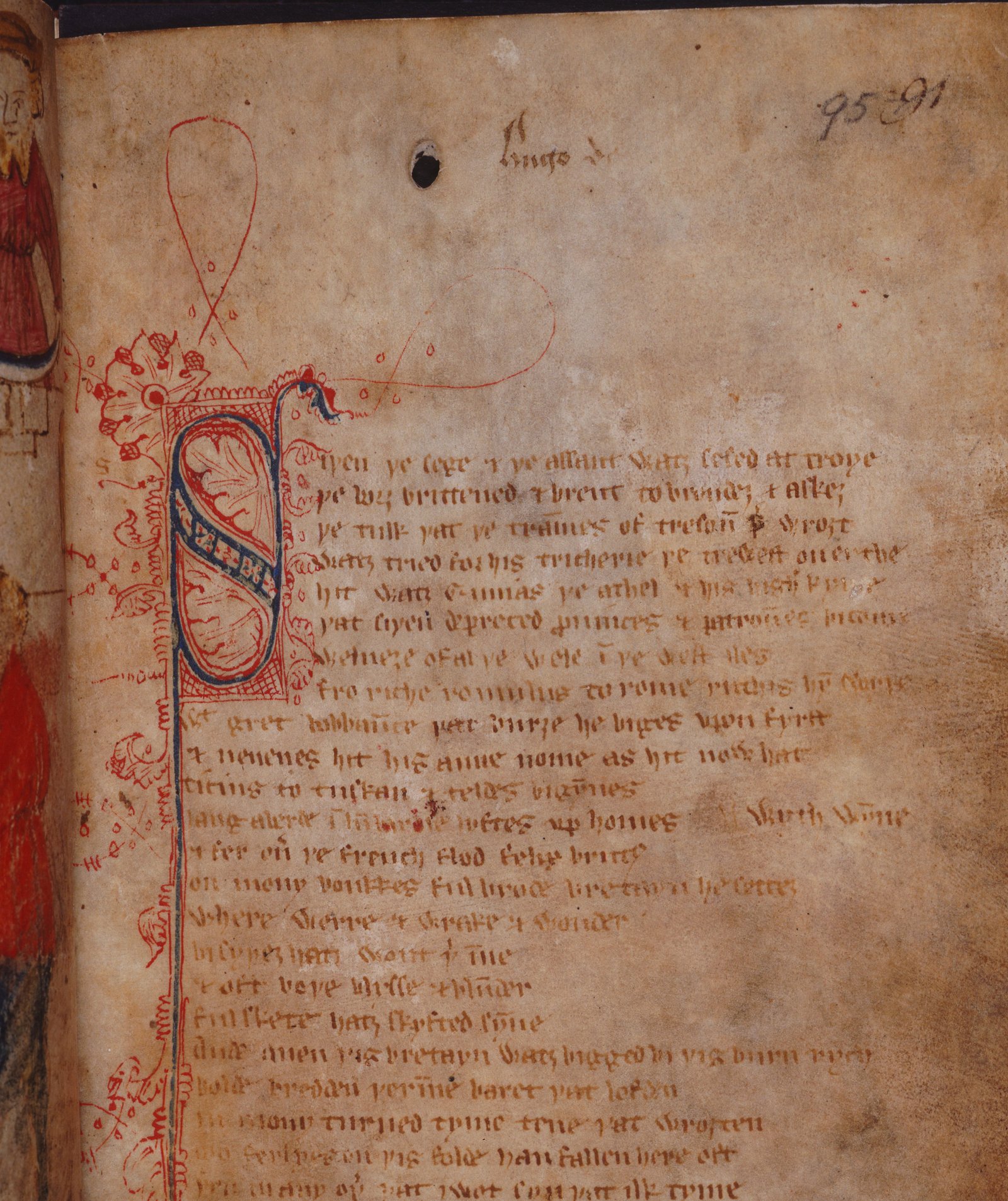
Go one link further up the chain. Who invented chivalric romance, the tale of a hero riding out on an adventure to prove himself? Chrétien de Troyes, in French, in the years 1160-1190. He gave the Arthurian legend its most enduring heroes, Lancelot, Yvain, Perceval, and it is in his Story of the Grail, left unfinished around 1190, that the Grail enters world literature.
The formula Chrétien invented, a coherent marvellous world, a quest, a hero who grows along the way, is precisely the matrix of fantasy. Between him and Tolkien the chain is unbroken: the French romances conquered England, inspired the English Arthurian poems Tolkien studied, and Tolkien drew from them the modern form of the genre. When Frodo leaves the Shire on a quest too great for him, he walks in tracks first opened in Champagne eight centuries earlier.
Roland’s olifant and Boromir’s horn
Another echo, more poignant. In The Song of Roland, the hero, out of pride, refuses to sound his olifant to call back Charlemagne, then sounds it too late, hard enough to burst his temples, and dies facing innumerable enemies. In The Lord of the Rings, Boromir, overwhelmed by orcs, sounds his great horn for help, and dies pierced by arrows before rescue arrives. Critics have often set the two scenes side by side: the same horn, the same proud and magnificent hero, the same death fighting alone against all.
Tolkien of course knew the oldest French chanson de geste. Whether conscious homage or deep literary memory, the result is the same: the breath of Roncevaux blows through Middle-earth.
What this story tells French learners
It tells you that medieval French literature is no museum piece: it is source code still running, at work in today’s fantasy novels, series and video games. To read Chrétien de Troyes or Roland is to read the origin of a worldwide imagination, and an unexpected gateway to the classics of French literature. At the Cours de Civilisation Française de la Sorbonne, civilisation is also read through its legends: our French courses in Paris and our online French courses bring today’s language into dialogue with a thousand years of texts, whatever your starting point on the CEFR scale from A1 to C2.
Frequently asked questions
Did Tolkien speak French?
Tolkien read French and knew medieval French literature as a specialist, but he made no secret of preferring Germanic and Scandinavian languages, and joked about his limited attraction to modern France. That never stopped him from working all his life on texts steeped in the French tradition.
What is Tolkien’s connection to Sir Gawain and the Green Knight?
With E.V. Gordon, Tolkien co-edited the standard scholarly edition of this 14th-century English Arthurian poem in 1925, and left a translation published in 1975, after his death. It is one of his major academic works.
Why is chivalric romance called a French invention?
Because it was Chrétien de Troyes who fixed its form in the French language around 1160-1190: a knight, a quest, a marvellous world. The word “romance” itself originally meant a tale in the Romance vernacular. The genre then conquered Europe, including the England of Sir Gawain.
Does Boromir’s horn come from the Song of Roland?
The parallel is striking and often noted by critics: like Roland with his olifant, Boromir sounds his horn in the face of innumerable enemies and dies before help arrives. Tolkien, a medievalist philologist, knew the French chanson de geste intimately.