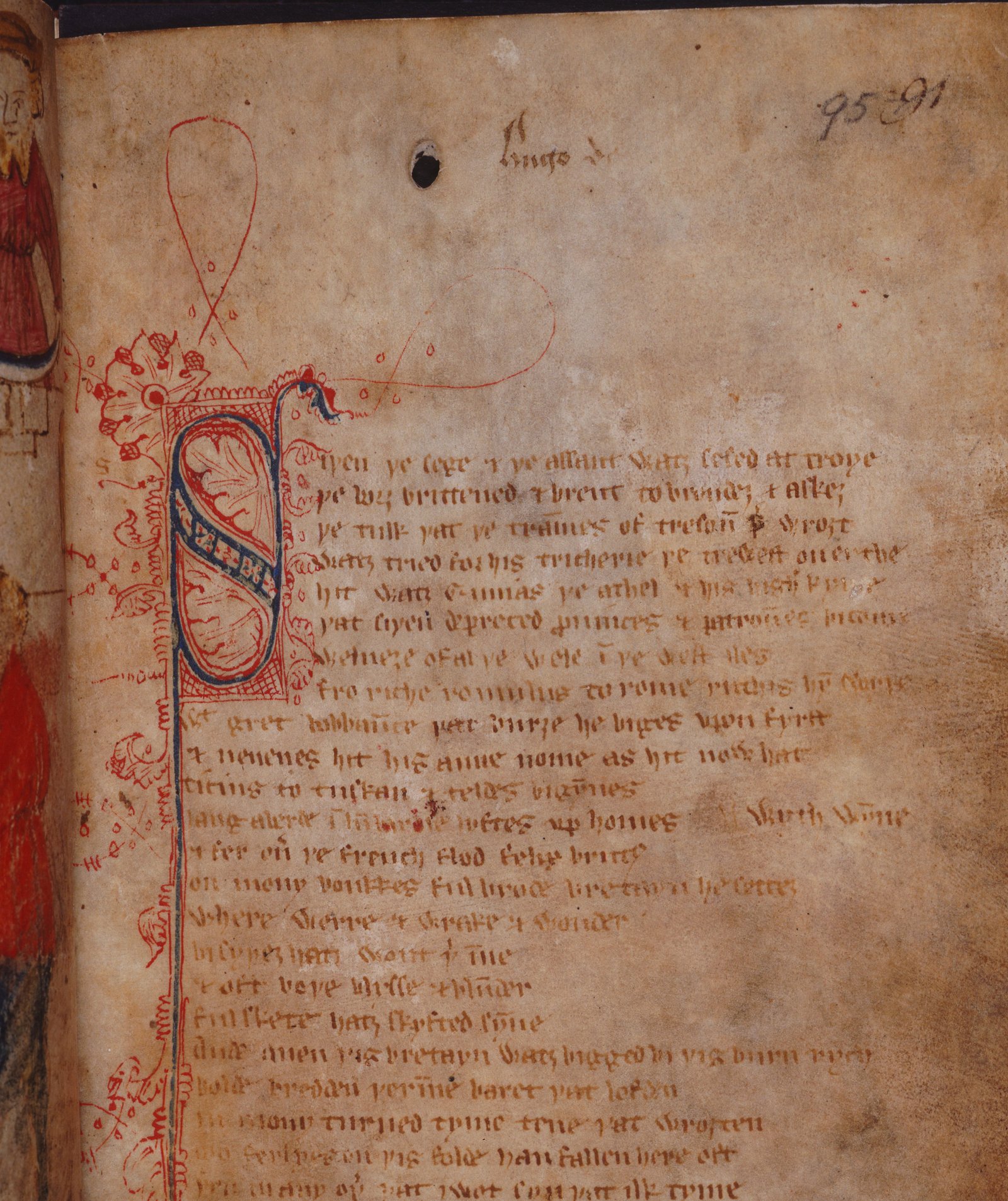
French literature begins with a defeat. Around 1100, a poet of whom we may know only the name, Turoldus, set into verse the disaster of Roncevaux: a rearguard crushed in a Pyrenean pass, a hero who refuses to call for help, an emperor who arrives too late. The Song of Roland, some 4,000 lines declaimed by minstrels from castle to castle, is the oldest surviving masterpiece of the French language. Here is its story, the true one and the legendary one, for the two could hardly be more different.
Key facts
- The Song of Roland (Chanson de Roland) is the oldest surviving chanson de geste, composed around 1100 (between 1040 and 1115 by scholarly estimates).
- Its best manuscript, the “Oxford manuscript” (Digby 23), copied in the twelfth century in Anglo-Norman, is kept at the Bodleian Library.
- The poem transforms a real event, the ambush of Roncevaux on 15 August 778 laid by Basque mountaineers, into an epic crusade against the Saracens.
- Its heroes and objects have passed into legend: Roland and Olivier, the sword Durendal, the olifant horn, the traitor Ganelon.
- The final line enigmatically names “Turoldus”, though nobody knows whether he was the author, the copyist or the performer.
The true story: the disaster of 15 August 778
In 778, Charlemagne was returning from a campaign in Spain. On 15 August, in the pass of Roncevaux in the Basque country, his rearguard was massacred in an ambush laid by Basque mountaineers, furious at the sacking of Pamplona. The emperor’s biographer, Einhard, lists among the dead a certain “Hruodland, prefect of the march of Brittany”. That is all: a few lines of chronicle, a lost skirmish against Christian Basques, and a name.
Three centuries later, the legend
Around 1100, in the age of the crusades, the poem remade history to its own measure. The Basques became an immense Saracen army, the skirmish a cosmic battle between Christendom and Islam, and the obscure Hruodland became Roland, Charlemagne’s nephew and the greatest knight of the empire. The chanson de geste does not record the past: it forges a heroic memory for its own present. Composed in assonanced laisses of ten-syllable lines, it was sung by minstrels to audiences who, for the most part, could not read.
What the poem tells
Betrayal, excess and vengeance. Ganelon, Roland’s stepfather, humiliated at being sent as envoy to the Saracen king Marsile, takes revenge by betraying the rearguard of the Frankish army. Attacked at Roncevaux with his twelve peers and twenty thousand men against an entire army, Roland refuses out of pride to sound the olifant and recall Charlemagne: calling for help would dishonour his family and sweet France. When he finally resolves to blow, it is too late for everyone, and the effort is so violent that the veins of his temple burst.
Before dying, Roland tries to shatter Durendal, his sword, against the rock so that it will not fall into enemy hands: it is the rock that splits. He then lies down facing Spain, as a victor, and holds out his glove to God. Charlemagne, returned too late, crushes the Saracen army, and Ganelon ends quartered after his trial. The hero’s excess, his death turned towards the enemy and that glove held out to heaven form one of the most famous scenes in all medieval literature.
“Roland is brave and Olivier is wise”
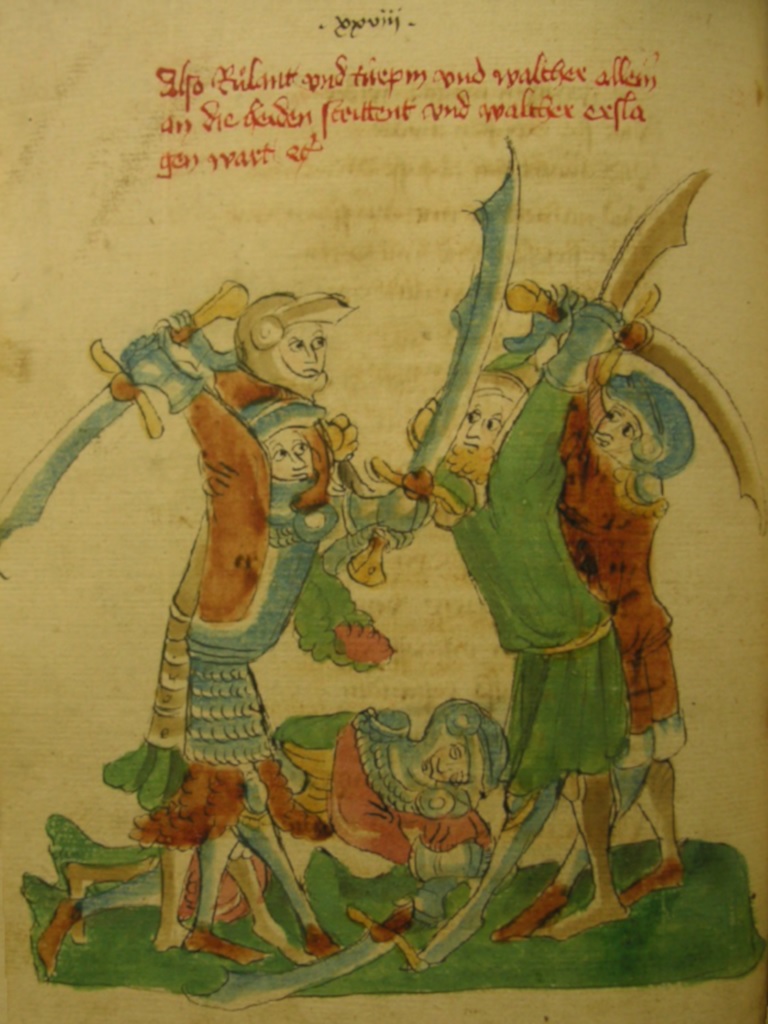
The poem’s most debated line sets the two friends against each other: Roland embodies prowess, bravery pushed to excess; Olivier, who begs him in vain to sound the olifant in time, embodies wisdom. The poem does not decide between them, and that is its modernity: nine centuries before our own debates about heroism, it stages the price of pride and lets the listener judge. Roland’s death is at once a moral triumph and a perfectly avoidable military catastrophe.
Durendal and the olifant, objects of legend
Few literary objects have enjoyed such a career. The olifant, an ivory horn carved from an elephant’s tusk, gave its name to all its kind. As for Durendal, local legend holds that the sword ended up embedded in the cliff of Rocamadour, where a blade stood in for it for centuries before pilgrims, until its rocambolesque theft in 2024. That France could have “Durendal” stolen in the twenty-first century is an involuntary tribute to the power of the myth.
Why this text founded French literature
Because everything starts here. The Song of Roland is the first great surviving monument of literature in the French language, before the word “literature” even existed. The chansons de geste opened the way, the medieval universities fixed learning in place, and François Villon closed that Middle Age as its poet. Reading Roland today, in a bilingual Old French and modern French edition, means going back to the river’s source, and it is more accessible than you might think: our French courses in Paris bring today’s language into dialogue with its classics, from intermediate to advanced level. And to see how this legacy flows all the way into modern fantasy, read our article on Tolkien and the French Middle Ages.
Frequently asked questions
Who wrote the Song of Roland?
Nobody knows. The final line of the Oxford manuscript names a “Turoldus”, but it is unclear whether this refers to the author, the copyist or the minstrel who performed the text. The work remains officially anonymous.
Did the battle of Roncevaux really happen?
Yes, on 15 August 778: Charlemagne’s rearguard was massacred there in an ambush laid by Basque mountaineers. The poem, composed three centuries later, turned that ambush into a great battle against the Saracens.
What is a chanson de geste?
A long medieval epic poem celebrating the deeds of warrior heroes, sung by minstrels. The word “geste” comes from the Latin gesta, great deeds. The Song of Roland is the oldest and most famous of them.
Why does Roland refuse to sound the olifant?
Out of honour and pride: calling Charlemagne for help would mean admitting fear and dishonouring his family and France. When he finally blows the horn, it is too late, and the effort bursts the veins of his temple.
Where is the sword Durendal?
Nowhere: it is an object of legend. Tradition placed it embedded in the cliff of Rocamadour, where a sword symbolised it for centuries until it was stolen in 2024. The myth itself is indestructible.
Article written by the team at the Cours de Civilisation Française de la Sorbonne and editorially reviewed before publication. Last updated: July 2026. Sources: Oxford manuscript (Bodleian Library, Digby 23), Einhard (Life of Charlemagne), reference editions of the Song of Roland (Bédier, Gallica/BnF).