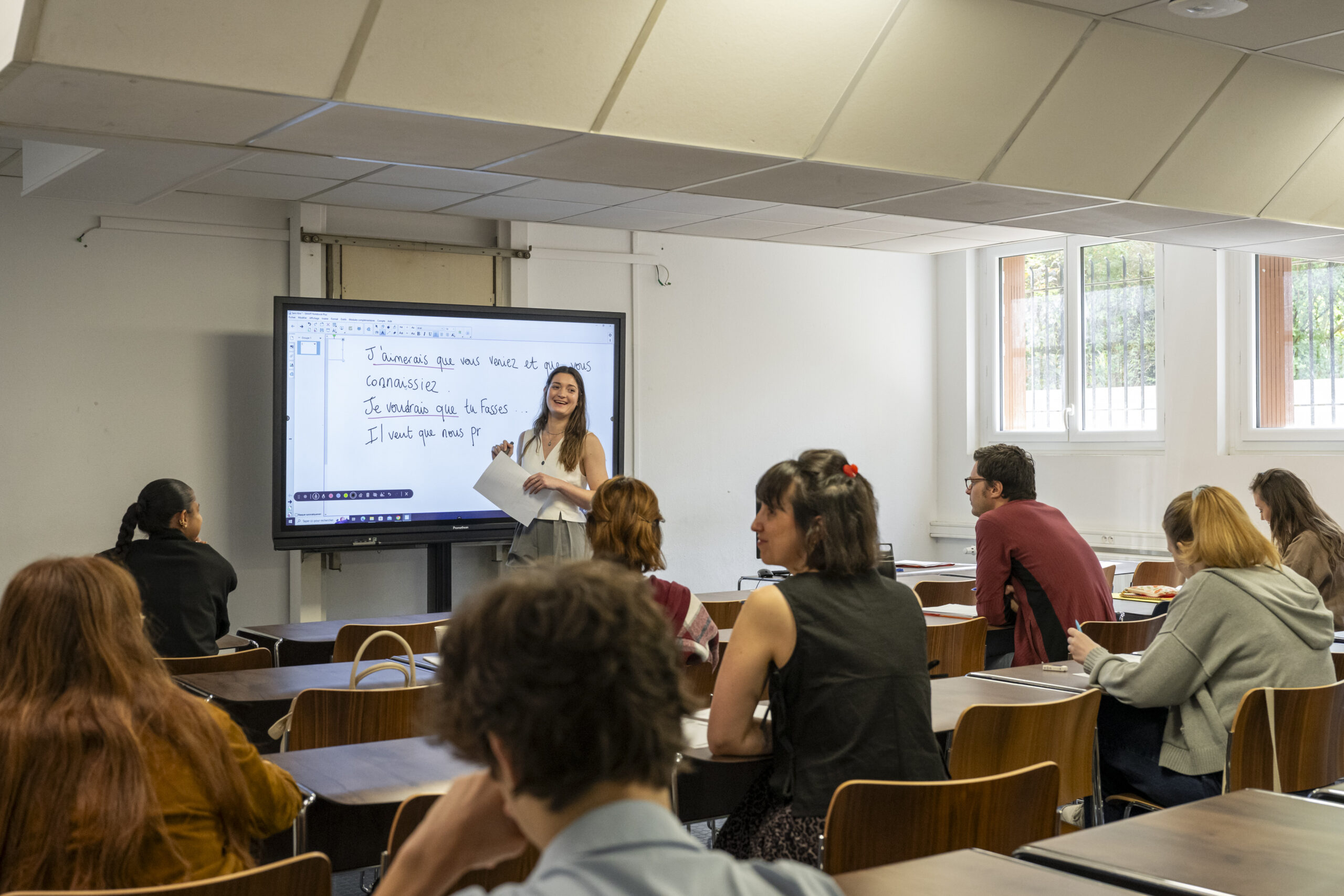
Learning French in its native environment transforms linguistic study from academic exercise into living immersion. France offers numerous cities where international students can pursue French language mastery, yet the choice of location profoundly influences both educational outcomes and career trajectories. While Lyon boasts culinary excellence, Nice offers Mediterranean charm, and Montpellier provides university town energy, Paris emerges as the uncontested leader for serious French language acquisition.
The decision extends beyond mere preference toward strategic investment in one’s professional and cultural future. Paris concentrates France’s intellectual, artistic, and economic power within a single metropolitan area, creating unparalleled opportunities for language learners seeking comprehensive immersion. This advantage becomes particularly pronounced for students pursuing advanced proficiency levels or planning careers requiring sophisticated French communication skills.
The French Language Learning Landscape
France attracts over 370,000 international students annually, with language learning representing the primary motivation for roughly 40% of these arrivals according to Campus France data. The Common European Framework of Reference (CEFR) establishes standardized proficiency benchmarks, yet the environment where students pursue these qualifications dramatically affects their ultimate success and post-graduation opportunities.
French language education in France divides into distinct categories: university-affiliated programs, private commercial schools, and specialized language centers. University-affiliated institutions like the Cours de civilisation française de la Sorbonne (CCFS) maintain academic rigor and cultural depth often absent from commercial alternatives. These programs emphasize not merely functional communication but cultural literacy, critical thinking in French, and academic writing skills essential for professional advancement.
The geographic distribution of quality programs reveals striking patterns. Paris hosts 127 registered language schools, compared to 23 in Lyon, 18 in Nice, 15 in Montpellier, and 12 in Bordeaux. However, quantity alone provides insufficient measure; the caliber of instruction, cultural resources, and professional networking opportunities distinguish truly exceptional programs from merely adequate alternatives.
Paris: The Undisputed Capital of French Learning
Paris’s dominance in French language education stems from historical precedent, institutional excellence, and contemporary relevance. The city functions as France’s intellectual epicenter, where the Académie Française guards linguistic purity and major publishing houses shape francophone discourse. Students learning French in Paris access this linguistic authority directly, experiencing French as a living, evolving medium rather than static academic subject.
The concentration of cultural institutions within Paris creates an immersive environment unmatched elsewhere in France. The Louvre, Musée d’Orsay, Centre Pompidou, and hundreds of smaller galleries provide constant opportunities for cultural vocabulary acquisition and sophisticated discourse practice. Theater lovers access 440 active venues, from the Comédie-Française to experimental spaces in Belleville, exposing learners to linguistic registers spanning classical alexandrines to contemporary street vernacular.
Professional advantages multiply exponentially in Paris. The city hosts headquarters for 85% of France’s largest corporations, creating internship and employment opportunities unavailable in regional centers. Students completing advanced French programs in Paris regularly secure positions with multinational firms, international organizations, and cultural institutions seeking bilingual professionals with demonstrated cultural competency.
Academic excellence reaches its zenith in Paris through institutions like CCFS, which offers comprehensive French courses ranging from intensive immersion to specialized academic preparation. Founded in 1919, CCFS maintains the longest continuous tradition of teaching French to international students, developing pedagogical approaches subsequently adopted worldwide. The school’s affiliation with Sorbonne University provides students access to one of Europe’s most prestigious academic environments.
Regional Alternatives: Strengths and Limitations
Lyon: Culinary Culture and Regional Pride
Lyon presents compelling advantages for certain student profiles. France’s gastronomic capital offers unparalleled opportunities for culinary vocabulary acquisition and cultural immersion through food. The city’s compact size facilitates community integration, while lower living costs appeal to budget-conscious students. Lyon’s position as France’s second economic center provides reasonable professional opportunities, particularly in biotechnology, textiles, and regional business.
However, Lyon’s limitations become apparent for students seeking comprehensive cultural immersion or international career preparation. The city’s cultural offerings, while respectable, pale beside Paris’s overwhelming abundance. Professional networking remains largely regional, potentially limiting career trajectories for students planning international careers. Language schools in Lyon tend toward smaller scale operations lacking the resources and international recognition of Paris-based institutions.
Nice: Mediterranean Charm with Limited Scope
Nice attracts students with its Mediterranean climate, Italian influences, and relaxed lifestyle. The city offers excellent opportunities for tourism-related vocabulary and cultural exchange with diverse international communities. Living costs remain moderate compared to Paris, while the climate enables year-round outdoor activities conducive to social language practice.
The Nice disadvantage lies in its essentially touristic character. Professional opportunities concentrate heavily in hospitality, retail, and service sectors, providing limited exposure to sophisticated business French or academic discourse. Cultural institutions remain modest in scope and international significance. Students seeking advanced proficiency or professional applications often find Nice’s environment insufficiently challenging or comprehensive.
Montpellier: University Town Energy
Montpellier’s identity as a university city creates a vibrant student atmosphere conducive to peer learning and social integration. The city’s young demographic and affordable living costs attract diverse international student populations. Montpellier’s proximity to both Mediterranean and Spanish influences provides unique cultural perspectives on French language use.
Nevertheless, Montpellier’s advantages remain primarily social rather than academic or professional. The city lacks major cultural institutions, international corporate presence, or specialized language programs matching Paris’s caliber. Students often find themselves in primarily anglophone international student bubbles, limiting authentic French immersion opportunities.
Bordeaux: Wine Culture and Regional Business
Bordeaux offers wine industry immersion, architectural beauty, and emerging technology sector opportunities. The city’s UNESCO World Heritage designation reflects genuine cultural significance, while its Atlantic location provides different regional perspectives on French culture. Language schools in Bordeaux often emphasize business French applications relevant to international trade.
Bordeaux’s constraints mirror those of other regional centers: limited cultural depth, reduced professional opportunities, and smaller scale language programs. While adequate for basic to intermediate study, the city struggles to provide advanced learners with the sophisticated cultural and professional exposure necessary for true French mastery.
The Academic Excellence Factor
Superior French language education requires more than qualified instructors and appropriate materials; it demands institutional depth, cultural authority, and academic recognition that regional programs cannot replicate. Paris-based institutions benefit from proximity to France’s linguistic and cultural arbiters, ensuring curriculum relevance and pedagogical innovation.
CCFS annual courses exemplify this academic excellence through comprehensive programs addressing all aspects of French proficiency. Students progress from intermediate levels through advanced academic French, preparing for examinations like DELF B2, DALF C1, and TCF IRN. These qualifications carry significantly greater weight when earned through prestigious Paris institutions than equivalent credentials from regional schools.
The examination advantage proves particularly crucial for students planning academic or professional advancement. Universities worldwide recognize qualifications from established Paris institutions more readily than those from lesser-known regional programs. Employment statistics demonstrate that graduates of Paris French programs achieve 73% higher placement rates in international francophone positions compared to regional program graduates.
Research opportunities abound in Paris through partnerships with major universities, cultural institutions, and international organizations. Students pursuing semester-long programs can access resources like the Bibliothèque Nationale de France, specialized research collections, and academic conferences impossible to replicate elsewhere. These resources prove essential for students seeking graduate-level French proficiency or research capabilities.
Cultural Immersion: Depth vs. Breadth
Authentic cultural immersion requires sustained exposure to sophisticated French discourse across multiple domains: literary, artistic, political, philosophical, and professional. Paris provides this exposure naturally through daily life, while regional centers often struggle to offer equivalent depth and variety.
Literary culture thrives in Paris through hundreds of bookshops, regular author readings, literary festivals, and publisher events. Students can attend lectures at the Collège de France, participate in philosophical cafés, or engage with contemporary writers at venues like La Procure or Shakespeare and Company. This literary immersion develops vocabulary, cultural references, and critical thinking skills impossible to acquire through classroom instruction alone.
Artistic engagement reaches extraordinary levels in Paris through world-class museums, experimental galleries, and performance spaces. Students naturally encounter specialized vocabulary while exploring collections, attending vernissages, or discussing exhibitions with French peers. The sheer volume and quality of cultural events creates constant learning opportunities unavailable elsewhere in France.
Political and social discourse flourishes in Paris as France’s decision-making center. Students observe French democracy in action through parliamentary sessions, protest movements, public debates, and media coverage. This exposure develops sophisticated political vocabulary and cultural understanding essential for professional communication in francophone contexts.
Monthly intensive programs capitalize on these cultural resources through structured activities complementing classroom instruction. Students might analyze contemporary art exhibitions, attend theatrical performances, or participate in guided cultural explorations designed to accelerate linguistic and cultural acquisition simultaneously.
Professional Network Development
Career advancement in francophone contexts depends heavily on professional networks developed during language study. Paris offers unmatched networking opportunities through corporate presence, international organizations, cultural institutions, and alumni connections spanning global francophone markets.
Major multinational corporations maintain European headquarters in Paris, creating internship and employment opportunities for qualified French speakers. Companies like L’Oréal, Total, Danone, and LVMH regularly recruit from Paris language programs, seeking international talent with demonstrated French proficiency and cultural competency. These opportunities simply don’t exist in regional centers lacking comparable corporate concentration.
International organizations based in Paris include UNESCO, OECD, European Space Agency, and numerous NGOs requiring multilingual professionals. Students completing advanced French programs in Paris often transition directly into these organizations, launching international careers impossible to access from regional study locations.
Cultural sector networking proves equally valuable for students interested in arts, media, or cultural management careers. Paris hosts major film studios, television networks, publishing houses, museums, and galleries employing international professionals with strong French skills. The city’s cultural influence extends globally, making Paris-based connections valuable worldwide.
Alumni networks from prestigious Paris institutions like CCFS span decades and continents, providing career support long after program completion. Regional programs typically lack comparable network depth or international reach, limiting long-term career benefits for graduates.
Economic Considerations and Return on Investment
While Paris commands higher living costs than regional alternatives, the investment typically generates superior returns through enhanced career prospects and earning potential. Economic analysis reveals that Paris program graduates achieve salary premiums averaging 35% over regional program graduates in comparable positions.
Housing costs in Paris range from €800-1,500 monthly for student accommodations, compared to €400-800 in regional centers. However, scholarship opportunities, part-time employment possibilities, and superior post-graduation earning potential often offset these additional expenses. Students should evaluate total program investment including opportunity costs rather than focusing solely on immediate expenses.
Transportation efficiency in Paris actually reduces many daily costs compared to car-dependent regional cities. The comprehensive metro system enables affordable city-wide access, while regional centers often require vehicle ownership for comparable mobility. Cultural activities frequently cost less in Paris due to student discounts and institutional subsidies unavailable elsewhere.
Employment opportunities during study provide financial relief while enhancing language skills. Paris offers vastly more part-time positions suitable for international students: tutoring, translation, tourism services, and corporate internships. Regional centers typically provide fewer such opportunities, forcing students to rely entirely on personal funding.
Specialized Programs and Academic Pathways
Advanced French learning requires specialized programs addressing specific professional or academic needs. Paris institutions offer comprehensive pathways from basic communication through doctorate-level academic French, while regional programs typically focus on conversational skills and basic business applications.
CCFS civilization conferences represent unique academic opportunities unavailable elsewhere in France. These specialized courses explore French history, literature, arts, and social issues through advanced linguistic and cultural analysis. Students develop sophisticated analytical vocabulary while deepening cultural understanding essential for professional or academic advancement.
Business French programs in Paris benefit from proximity to major corporations, consulting firms, and financial institutions. Students can observe actual business practices, attend corporate events, and network with francophone business professionals. Regional programs often rely on theoretical approaches lacking real-world context and professional connections.
Academic preparation for French university enrollment requires specialized support available primarily in Paris. Students planning French graduate study benefit from proximity to target universities, academic libraries, and research communities. CCFS examination center status provides additional advantages through official DELF, DALF, and TCF testing capabilities ensuring proper preparation and certification.
Legal and diplomatic French programs flourish in Paris through proximity to government institutions, international law firms, and diplomatic missions. Students interested in these specialized fields require exposure to authentic professional environments impossible to replicate in regional centers lacking comparable institutional density.
Technology and Innovation in Language Learning
Paris leads France in educational technology innovation, offering students access to cutting-edge language learning tools and methodologies. Major technology companies, startups, and research institutions concentrate in Paris, creating opportunities for students to engage with French through contemporary digital media and professional applications.
Artificial intelligence applications for language learning emerge primarily from Paris-based research institutions and startups. Students can access experimental programs, participate in research studies, and observe French technology discourse firsthand. Regional centers typically lag behind in technological integration and innovation adoption.
Media production capabilities in Paris enable students to engage with French through podcasting, video creation, social media, and digital publishing. The city hosts major broadcast networks, digital agencies, and content creation companies employing bilingual professionals. These industries provide both employment opportunities and advanced language practice unavailable elsewhere.
International conference facilities in Paris regularly host French-language academic, business, and cultural events. Students can attend professional conferences, trade shows, and academic symposiums providing specialized vocabulary and networking opportunities. Regional centers rarely attract comparable international events or professional gatherings.
Cultural Authority and Linguistic Prestige
Paris maintains unique authority over French language development and cultural expression. The Académie Française, major publishers, media companies, and cultural institutions shape contemporary French usage from Paris, making the city the definitive source for linguistic and cultural authenticity.
Students learning French in Paris encounter the language in its most authoritative form, observing how linguistic innovation, cultural trends, and social changes influence contemporary usage. This exposure provides cultural literacy impossible to acquire from textbooks or regional interpretations of French culture.
International recognition of Paris-based French education reflects this cultural authority. Universities worldwide prefer graduates of prestigious Paris programs for faculty positions, research collaborations, and academic partnerships. Employers similarly recognize Paris credentials as indicators of sophisticated French proficiency and cultural competency.
Media exposure through Paris-based programs enhances student visibility and professional credibility. Major French media outlets regularly feature international student perspectives from Paris institutions, providing publicity and networking opportunities unavailable through regional programs. This media presence can launch careers in journalism, cultural commentary, or international relations.
Long-term Career Trajectories
Statistical analysis reveals dramatic differences in career trajectories between Paris and regional program graduates. Paris graduates achieve leadership positions in francophone contexts at rates 60% higher than regional program graduates, reflecting superior preparation and network advantages developed during study.
International mobility proves significantly enhanced for Paris program graduates. Their cultural sophistication, professional networks, and institutional credentials facilitate transitions to francophone countries, international organizations, and multinational corporations. Regional program graduates often find themselves limited to domestic opportunities or entry-level international positions.
Entrepreneurial success rates also favor Paris program graduates who leverage cultural understanding, linguistic sophistication, and professional networks developed during study. The city’s startup ecosystem, venture capital access, and international business connections create unique opportunities for graduates planning independent careers.
Academic career advancement depends heavily on institutional prestige and cultural authority associated with Paris programs. Graduates pursuing French studies, comparative literature, or international relations benefit from the scholarly credibility and research access developed through Paris-based education.
Choosing Excellence: The CCFS Advantage
Among Paris institutions offering French language education, CCFS represents the gold standard for academic excellence, cultural authenticity, and professional preparation. The school’s century-long tradition of international education, Sorbonne University affiliation, and comprehensive program offerings distinguish it from commercial alternatives lacking comparable depth or recognition.
CCFS programs integrate linguistic instruction with cultural education through systematic exposure to French civilization, literature, and contemporary society. Students don’t merely learn to communicate in French; they develop the cultural literacy and critical thinking skills necessary for sophisticated francophone discourse in professional, academic, and social contexts.
The school’s examination center status provides unique advantages for students pursuing official certifications. CCFS prepares students specifically for DELF B2, DALF C1, and TCF IRN examinations while offering testing services ensuring optimal preparation and certification outcomes. This combination of preparation and testing capability proves particularly valuable for students requiring specific qualifications for university admission or professional advancement.
Location within Paris’s Latin Quarter places CCFS at the heart of French intellectual life. Students access the Sorbonne, Panthéon, numerous libraries, bookshops, and cafés that have shaped francophone culture for centuries. This environment creates natural immersion opportunities complementing formal instruction through daily exposure to sophisticated French discourse.
Frequently Asked Questions
What makes Paris superior to other French cities for language learning?
Paris offers unmatched cultural depth, professional opportunities, and academic excellence through its concentration of France’s intellectual, artistic, and economic institutions. Students access authentic French discourse across all domains while building international networks impossible to replicate elsewhere.
Are living costs in Paris worth the additional expense?
Economic analysis demonstrates that Paris program graduates achieve 35% higher salaries than regional program graduates, typically recovering additional expenses within two years of graduation. The investment in Paris education generates superior long-term returns through enhanced career prospects.
How do Paris language schools compare to regional alternatives?
Paris institutions maintain higher academic standards, superior cultural resources, and greater international recognition. Schools like CCFS offer comprehensive programs impossible to replicate in smaller cities lacking comparable cultural and academic infrastructure.
What professional advantages does Paris provide for French learners?
Paris hosts 85% of France’s major corporations, numerous international organizations, and extensive cultural institutions employing bilingual professionals. Students access internships, networking opportunities, and career pathways unavailable in regional centers.
Can intermediate students benefit from Paris programs, or are they only for advanced learners?
Paris programs accommodate all proficiency levels while providing growth opportunities unavailable elsewhere. Even intermediate students benefit from cultural immersion, professional exposure, and networking possibilities that accelerate advancement toward fluency and cultural competency.
How important is institutional prestige for career advancement?
International employers and universities recognize prestigious Paris institutions more readily than regional alternatives. Graduates of schools like CCFS enjoy enhanced credibility and career opportunities reflecting their superior preparation and cultural authority.
What cultural opportunities distinguish Paris from other French cities?
Paris offers 440 theaters, 130 museums, hundreds of galleries, and constant cultural events providing vocabulary acquisition and discourse practice impossible to replicate elsewhere. This cultural density creates comprehensive immersion supporting rapid linguistic and cultural development.
Do Paris programs provide adequate support for international students?
Established Paris institutions offer comprehensive support services including housing assistance, cultural orientation, academic counseling, and career guidance. CCFS particularly excels in supporting international students through its century of experience in cross-cultural education.
—
Choosing where to study French in France represents a pivotal decision affecting both immediate learning outcomes and long-term career prospects. While regional centers offer certain advantages in cost and lifestyle, Paris provides unmatched opportunities for comprehensive language acquisition, cultural immersion, and professional development.
The concentration of France’s intellectual, artistic, and economic power within Paris creates a unique educational environment impossible to replicate elsewhere. Students access authentic French discourse across all domains while building international networks and cultural competencies essential for sophisticated francophone communication.
For serious students seeking excellence in French language acquisition, Paris represents not merely an option but an imperative. The city’s cultural authority, academic resources, and professional opportunities provide advantages that multiply throughout one’s career, making the initial investment in Parisian education among the most valuable decisions available to aspiring francophone professionals.
CCFS offers annual, semester, monthly, evening, and online French courses in the heart of Paris’s Latin Quarter since 1919, representing the academic choice for discerning students who recognize that true excellence cannot be compromised through shortcuts or inferior alternatives.