Eleanor (Aliénor) of Aquitaine: the queen who ruled France and England
Every age has its exceptional figures, individuals whose lives seem too vast, too dramatic, too consequential for a single lifetime. Eleanor (Aliénor) of Aquitaine is one of them. Born around 1122 in the sun-drenched lands of southwestern France, she would become queen of France, then queen of England, mother to two kings, patron of poets, instigator of rebellions, and architect of a cultural revolution that shaped the Western world. Her story reads like a medieval epic because, in many ways, it is one.
For students of French civilization, Eleanor is far more than a historical curiosity. She stands at the crossroads of two of France’s greatest contributions to world culture: the birth of courtly poetry and the elevation of the French language as a literary instrument. Understanding Eleanor is understanding how medieval France invented an entire vocabulary of love, honor, and beauty that still resonates today.
The heiress of Aquitaine: a duchy richer than a Kingdom
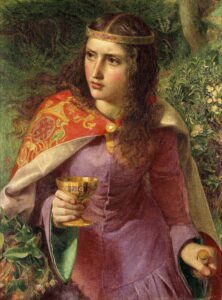
To understand Eleanor, one must first understand what she inherited. When her father, Duke William X of Aquitaine, died on pilgrimage in 1137, the fifteen-year-old Eleanor became the most powerful heiress in Europe. Aquitaine was not merely a province it was a vast, wealthy territory stretching from the Loire to the Pyrenees, encompassing Poitou, Gascony, and the Limousin. Its vineyards, trade routes, and fertile lands made it richer than the royal domain of France itself.
But Aquitaine’s wealth was not only material. It was a cultural powerhouse. Eleanor’s grandfather, William IX of Aquitaine, is considered the first known troubadour the earliest poet to compose lyric verse in a vernacular language rather than Latin. In his court, a tradition was born: the celebration of fin’amor, a sophisticated ideal of love that elevated women to objects of devotion and turned poetic expression into an aristocratic art form.
Eleanor grew up steeped in this tradition. She was educated, multilingual, and fiercely independent qualities rare enough in any century, and extraordinary in the twelfth.
Queen of France: a crown too small
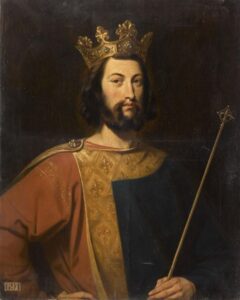
Within weeks of her father’s death, Eleanor (Aliénor) was married to Prince Louis, heir to the French throne. When King Louis VI died that same year, the young couple became King Louis VII and Queen Eleanor of France. She was barely sixteen.
Paris in the 1130s was a world away from sunlit Aquitaine. The French court was austere, pious, and dominated by the influence of Abbot Suger and the monastic reformer Bernard of Clairvaux. Eleanor, accustomed to the lively troubadour culture of the south, found the northern court stifling. Contemporary chroniclers noted the tension: she was too worldly, too spirited, too visible for a queen expected to be demure and devout.
The second crusade: adventure and scandal
In 1147, Eleanor took the extraordinary step of accompanying Louis VII on the Second Crusade. She was not content to wait at home; she rode to the Holy Land with her own entourage of Aquitanian ladies. The crusade was a military disaster, and the royal marriage frayed under the strain. Rumors swirled about Eleanor’s behavior at the court of her uncle Raymond in Antioch whispers that have fueled historical speculation ever since.
By the time the couple returned to France in 1149, their relationship was broken beyond repair. Eleanor had produced two daughters but no male heir, and the political and personal gulf between them had grown unbridgeable. In 1152, their marriage was annulled on grounds of consanguinity a convenient legal fiction that masked the deeper incompatibility.
Queen of England: the plantagenet ascent
What happened next stunned Europe. Within eight weeks of her annulment, Eleanor married Henry Plantagenet, Count of Anjou and Duke of Normandy a man eleven years her junior, ambitious, energetic, and destined for greatness. When Henry became King Henry II of England in 1154, Eleanor found herself queen for the second time, now ruling over a domain that stretched from the Scottish border to the Pyrenees.
Together, they built the Angevin Empire, the most formidable political entity in Western Europe. Eleanor bore Henry eight children, including the future Richard I (the Lionheart) and John, who would later sign the Magna Carta. She was no passive consort; she governed territories in Henry’s absence, issued charters, and exercised real political authority.
The court of Poitiers: birthplace of courtly culture
It is during the 1160s and 1170s that Eleanor’s cultural legacy reaches its zenith. Establishing her court at Poitiers, she created what historians have called the most brilliant cultural salon of the medieval world. Here, surrounded by her daughter Marie de Champagne and a circle of poets, musicians, and intellectuals, Eleanor presided over a revolution in European letters.
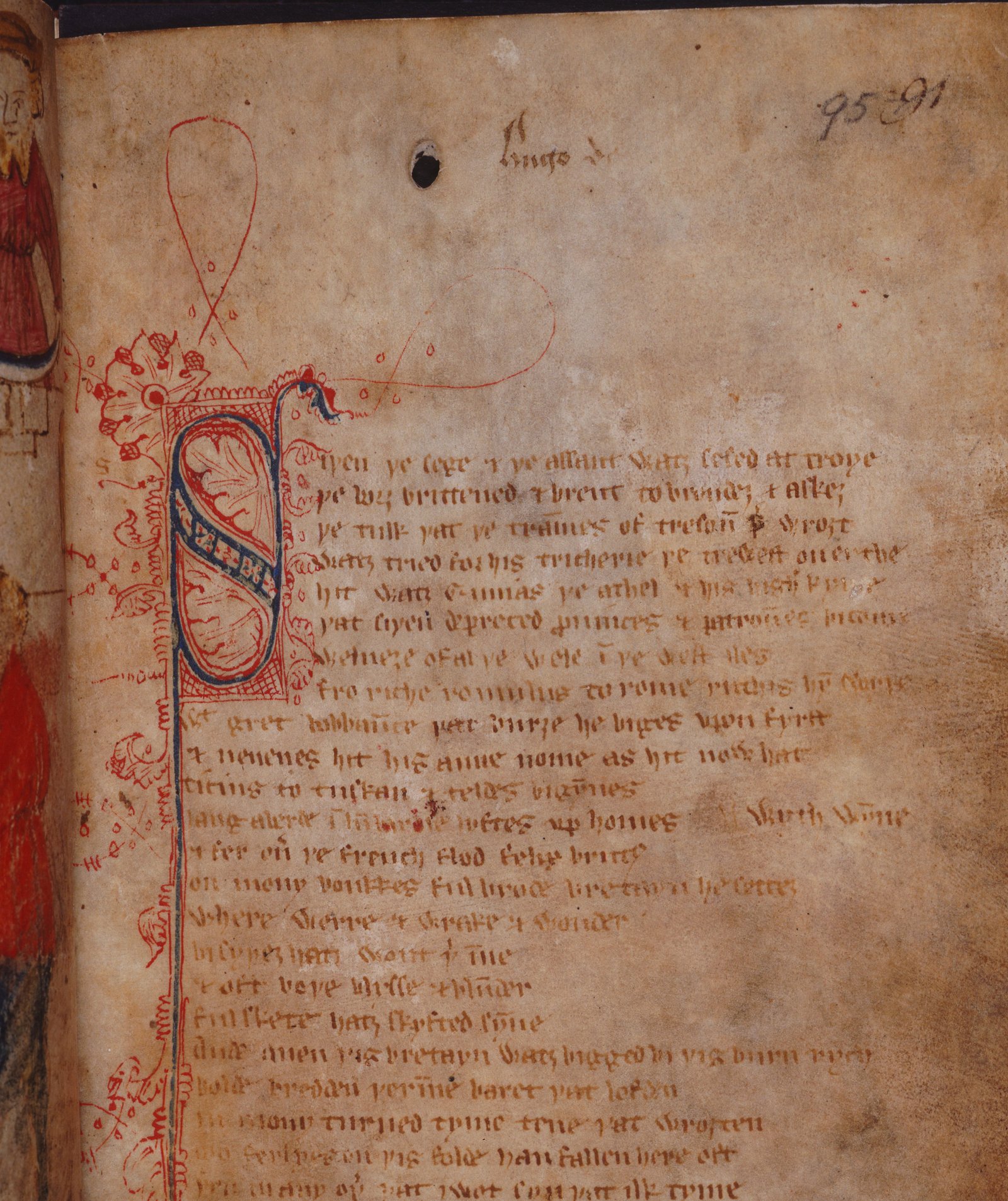
The troubadour tradition her grandfather had initiated now flourished on a grand scale. Poets like Bernard de Ventadour composed exquisite lyrics celebrating idealized love, devotion, and the beauty of the beloved. The language of these poems was Occitan the “langue d’oc” but their themes and forms soon migrated northward into the l”angue d’oïl”, the ancestor of modern French.
It was in this milieu that the concept of “courtly love” crystallized into a literary and social code. Andreas Capellanus wrote his famous treatise “De Amore” at Eleanor’s court, codifying the “rules” of refined love. And it was Marie de Champagne, Eleanor’s daughter by Louis VII, who would commission a certain poet named Chrétien de Troyes to compose romances that would transform European literature forever.
The connection is direct and profound: without Eleanor’s patronage, without the cultural ecosystem she nurtured, the Arthurian romances Lancelot, Perceval, the Holy Grail might never have taken the form we know today. Eleanor’s court was the crucible in which the French language became a vehicle for the highest literary expression.
Rebellion, captivity, and resilience
Eleanor’s marriage to Henry II, like her first marriage, ended in conflict but on a far more dramatic scale. In 1173, she supported her sons in a rebellion against their father. Henry crushed the revolt and imprisoned Eleanor for the next sixteen years. She was held in various English castles, her freedom curtailed but her spirit unbroken.
It was only upon Henry’s death in 1189 that Eleanor regained her liberty. She was sixty-seven years old an extraordinary age for the twelfth century and she threw herself back into political life with remarkable vigor.
The Lionheart’s mother
When her beloved son Richard I departed on the Third Crusade, Eleanor (Aliénor) served as regent of England. When Richard was captured and held for ransom by the Holy Roman Emperor, it was Eleanor who marshaled the resources to secure his release, famously writing anguished letters to Pope Celestine III demanding intervention. “I am wasted with torment,” she wrote, “my bones cling to my skin.”
After Richard’s death in 1199, Eleanor supported the succession of her youngest son John, traveling across the Pyrenees at the age of seventy-seven to fetch her granddaughter Blanche of Castile, who would marry the future Louis VIII of France and eventually become one of the most powerful regents in French history.
Eleanor’s legacy: the mother of european culture
Eleanor of Aquitaine died in 1204 at the abbey of Fontevraud, where she was buried alongside Henry II and Richard the Lionheart. She was approximately eighty-two years old a life of astonishing length and scope.
Her legacy is immeasurable. Politically, she shaped the destinies of both France and England for generations. Dynastically, her descendants sat on thrones across Europe. But it is her cultural legacy that endures most powerfully.
The french language as a literary instrument
Eleanor’s courts first in Aquitaine, then in Poitiers, then through her daughter Marie in Champagne were the laboratories where vernacular literature was elevated from entertainment to art. The troubadour tradition she championed demonstrated that the spoken languages of France could express the most refined emotions and ideas. This was a revolutionary proposition in an age when Latin dominated all serious writing.
The ripple effects were enormous. The courtly romances that emerged from Eleanor’s cultural orbit — the works of Chrétien de Troyes, the Roman de la Rose, the Arthurian cycles established French as the prestige literary language of medieval Europe. From England to Italy, from Germany to the Crusader states, French became the language of chivalry, diplomacy, and sophisticated culture.
A model of female power
In an age when women were largely excluded from political life, Eleanor exercised power on the grandest stage. She was not merely a queen twice over; she was a political actor, a patron, a strategist, and a survivor. Her example inspired generations and continues to fascinate historians, novelists, and filmmakers to this day.
Discover french civilization with the CCFS
Eleanor of Aquitaine’s story is inseparable from the story of France itself from the troubadour courts of the south to the Gothic cathedrals of the north, from the birth of courtly poetry to the rise of the French language as a global cultural force. Understanding figures like Eleanor means understanding the deep roots of French civilization.
At the Cours de civilisation française de la Sorbonne (CCFS), we offer students from around the world the opportunity to explore this extraordinary heritage. Our French civilization courses combine language learning with deep cultural immersion, allowing you to discover the history, literature, and ideas that have shaped France and the world.
Whether you are drawn to medieval poetry, royal history, or the origins of the French language, the CCFS provides the ideal setting in the heart of Paris, in the tradition of the Sorbonne to begin your journey.