
Villon’s Ballad against the Enemies of France: defending the kingdom

Villon is known for his confessions about his own poverty, his irony and his regrets. The Ballad against the Enemies of France shows another side of the poet: a man who steps outside himself to curse, line after line, anyone who would harm the kingdom. Three stanzas, an envoi, a refrain that falls like a blade, and a parade of torments borrowed from antiquity and the Bible. Here is a reading of this early poem, in which Villon becomes, for once, the voice of France.

Key facts

  • The Ballad against the Enemies of France, also called the Ballade contre les mesdisans de la France, belongs to Villon’s Poésies diverses, outside the Testament.
  • It is a curse in verse: each stanza piles up terrible torments, wished upon “whoever would wish ill on the kingdom of France.”
  • The poem blends classical references (Jason, Tantalus, Narcissus, Sardanapalus) with biblical ones (Nebuchadnezzar, Job, Absalom, Jonah).
  • It was written in a France emerging from the Hundred Years’ War, which ended in 1453, and still scarred by English occupation.
  • Its form is the classic medieval ballade: three eight-line stanzas and an envoi addressed to the “Prince.”

A poem against type

The Villon usually quoted speaks of himself: his poverty, his loves, his fear of death. To discover the man and his life on the run, read our portrait, Who was François Villon, the cursed poet of the Middle Ages. The Ballad against the Enemies of France is of another kind. The poet effaces himself behind a collective cause and takes up the defence of the kingdom. This patriotic stance, rare in his work, gives the poem a singular energy.

The device is simple and formidable. In each stanza, Villon heaps up the punishments he calls down on the enemies of France, then closes with the same refrain, “whoever would wish ill on the kingdom of France.” The list works like a machine: the longer it grows, the more crushing the threat becomes.

A catalogue of classical and biblical torments

The poem’s force lies in its learning. Villon summons mythology, ancient history and Scripture in turn to imagine the worst of fates. He wishes the kingdom’s enemies the lot of Jason lost at sea, the madness of Nebuchadnezzar turned into a beast, the eternal thirst of Tantalus, the torment of Narcissus drowned in his own reflection, the fatal hair of Absalom hanged from a tree, the whale’s belly where Jonah languished, or the end of King Sardanapalus.

This accumulation is not idle. In the Middle Ages, the educated listener recognised every name and every story. The poem becomes a contest of knowledge as much as a curse: Villon proves that he masters the references of a Master of Arts of the University of Paris, while striking hard. The ballad addresses enemies who are never named, which makes them timeless: adversaries of yesterday, today and tomorrow, from without and from within.

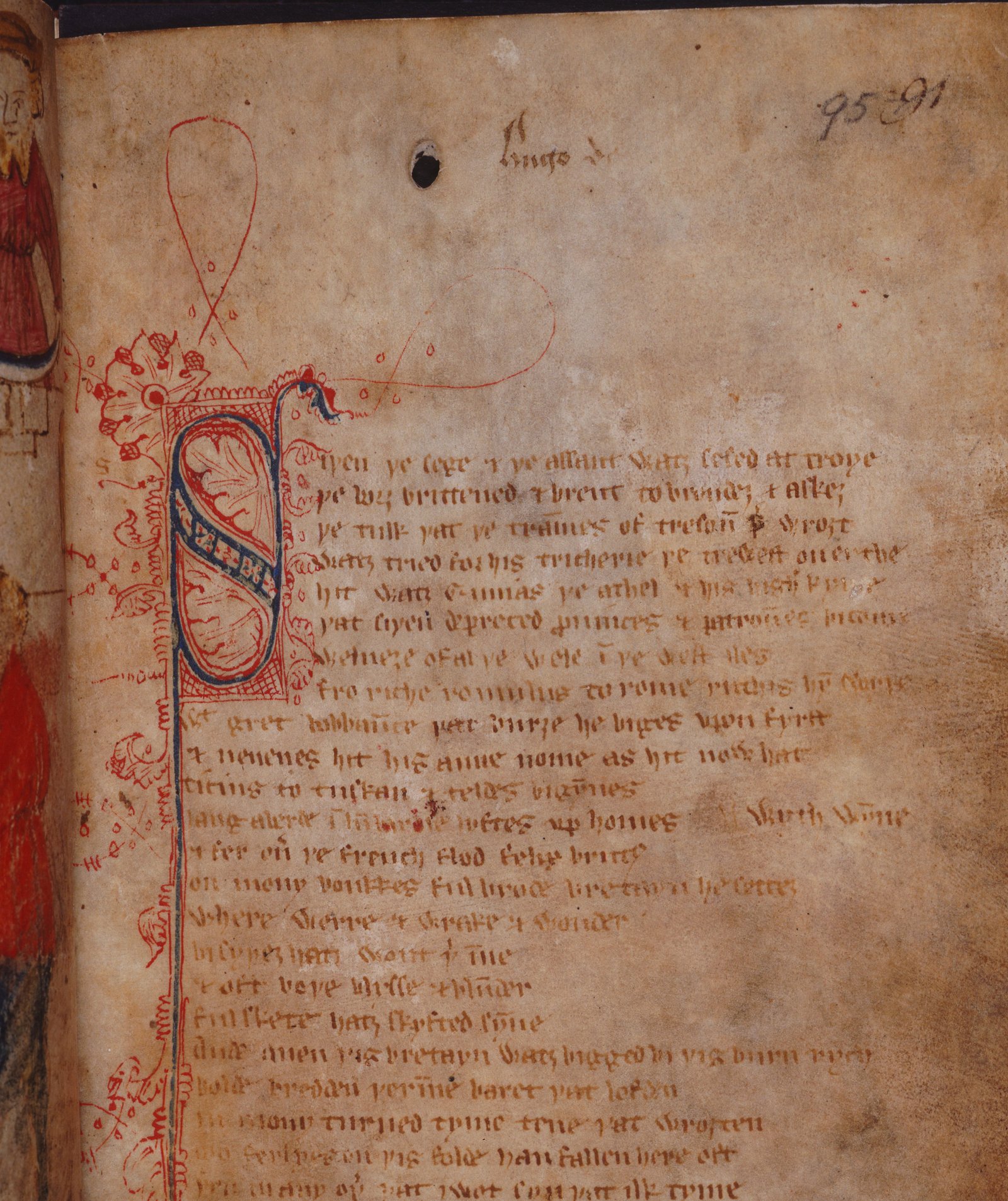
King of France in the Grandes Chroniques de France

The kindom of France in the Grandes Chroniques de France. Public domain, via Wikimedia Common.

The context: a France wounded by war

Villon wrote in the France of the mid-fifteenth century. The Hundred Years’ War ended in 1453. Paris, long held by the English and the Burgundians, was only retaken in 1436, a few years after the poet’s birth. The memory of occupation was fresh. In that context, cursing the enemies of the kingdom was anything but abstract: it touched a collective wound still open.

The refrain, “whoever would wish ill on the kingdom of France,” then rings out like an oath. Villon, whose life was marked above all by his own troubles with the law, here sides with the community. The outlaw becomes, for the space of one ballad, a defender of the nation.

A lesson in fixed form

The medieval ballade follows strict rules. Three stanzas built on the same rhymes, a refrain line that closes each of them, and a shorter final envoi, traditionally addressed to a “Prince.” Villon observes this frame while slipping his virtuosity into it. To read this poem is also to understand how the great court poetry worked before the sonnet arrived in the Renaissance.

Studying Villon in the original means becoming familiar with Middle French, its spelling and its vocabulary. That is one of the pleasures of learning French through its literature and history. At the Cours de Civilisation Française de la Sorbonne, the language is studied at every level: discover our French courses in Paris.

Frequently asked questions

What is the Ballad against the Enemies of France about?

It is a curse in verse: Villon lists a series of terrible torments he wishes upon all those who would harm the kingdom of France. Each stanza closes on the refrain “whoever would wish ill on the kingdom of France.”

Is the ballad part of Villon’s Testament?

No. It belongs to the Poésies diverses, the set of pieces written outside the Lais and the Testament, the poet’s two great collections.

Why does the ballad cite so many ancient figures?

To give weight to the curse. By borrowing the worst fates of mythology, ancient history and the Bible (Tantalus, Nebuchadnezzar, Absalom, Jonah), Villon displays his learning and makes the punishments more striking.

Who are the enemies Villon targets?

The poem names no one. The enemies remain undefined, which makes them timeless: any adversary of the kingdom, present or future, internal or external.

What is an envoi in a ballade?

It is the shorter final stanza that closes a medieval ballade. It is traditionally addressed to a “Prince” and repeats the refrain. It is a convention of the fixed form that Villon observes.


Article written by the team at the Cours de Civilisation Française de la Sorbonne and editorially reviewed before publication. Last updated: June 2026. Reference text: Ballade contre les mesdisans de la France, in François Villon’s Poésies diverses. Historical details drawn from standard sources on the Hundred Years’ War.
Similar articles

Who was François Villon, the cursed poet of the Middle Ages?

He killed a priest, burgled a college, came within a rope’s length of the gallows, then vanished without trace at thirty-one. François Villon is also the greatest French poet of the Middle Ages, the one who brought into the language the ache of passing time and the voice of a man alone before his own death. We know this life

Read more

French Language Proficiency Levels: A Complete Guide to CEFR A1-C2

Mastering French Language Proficiency Levels: A Comprehensive Guide to CEFR Standards and Realistic Timelines Have you ever wondered how many French language proficiency levels exist and how long it takes to master each one? Understanding the CEFR framework is key to measuring your progress, from basic communication to advanced fluency. With six distinct levels—ranging from A1 (beginner) to C2 (mastery)—this

Read more
Logo des Cours de Civilisation Française de la Sorbonne
visage popup ccfs - Cours de Civilisation Française de la Sorbonne

CCFS Discovery Week
From July 16 to 26

Experience CCFS before your courses even begin!

CCFS Sorbonne invites you to take part in an exceptional Discovery Week — the perfect opportunity for future students, curious minds, and lovers of the French language and culture to immerse themselves in the unique world of CCFS.

On the agenda: campus tour, online trial classes, online lectures…
All events are free but require registration. Limited slots.

Semaine de découverte des CCFS du 16 au 26 juillet

Venez vivre l’expérience CCFS avant même de commencer vos cours !

Les Cours de Civilisation Française de la Sorbonne vous ouvrent leurs portes lors d’une semaine de découverte exceptionnelle : l’occasion idéale pour les futurs étudiants, les curieux et les passionnés de langue et de culture françaises de plonger dans l’univers unique des CCFS.

Au programme : visite du campus, cours d’essai en ligne, conférences en ligne… Inscription gratuite mais obligatoire. Places limitées.

Logo des Cours de Civilisation Française de la Sorbonne

Information

Attention, le secrétariat sera fermé le lundi 25 mai. Merci de faire vos démarches en ligne.

En raison des examens DELF/DALF, pourrais-tu mettre en ligne que le secrétariat sera exceptionnellement fermé aux dates suivantes :

  • Le 20 mai
  • Le 10 juin
  • Le 8 juillet

Les cours semestriels S10, S20, S40 et AN40 pour la rentrée de printemps sont désormais complets.
Pour vous inscrire en liste d’attente merci de contacter le secrétariat au 01 44 10 77 00

Semester courses S10, S20, S40, and AN40 for the spring semester are now full.
To join the waiting list, please contact the secretariat at
+331 44 10 77 00.

Focus

Découvrez les cours mensuels de français.

Ces programmes courts sont destinés à un public de niveau débutant, élémentaire ou intermédiaire (niveaux A0 à B1).

Étudiant des Cours de Civilisation Française de la Sorbonne

Discover monthly French courses.

These short programs are designed for beginners, elementary, or intermediate learners (levels from A0 to B1).

They combine French language classes and speaking practice sessions to help students quickly improve their mastery of the French language.

 📣  Conférence découverte “Explorez Lyon avec Mme Dally”

📅  Lundi 30 juin à 15h30
sur le campus des CCFS

 📣  Open Lecture – Explore Lyon with Ms. Dally

📅  Monday, June 30 at 3:30 PM
on CCFS campus

Participez gratuitement à une immersion culturelle vivante, accessible dès le niveau A2, à la découverte d’une ville emblématique du patrimoine français.

👉 Cette conférence est l’occasion idéale de découvrir le format de nos conférences et de visiter notre campus dans une ambiance conviviale !

📍 Lieu : Campus des CCFS
7-11 avenue des Chasseurs
75017 Paris
👥 Ouvert au public, sur inscription
🎓 Accessible à partir du niveau A2

Au programme :

– Accueil sur le campus (15h15)
– Conférence : Lyon, une ville à explorer (1h15 min)
– Échange avec l’enseignante & découverte des CCFS (15 min)

ℹ️ L’entrée est gratuite, dans la limite des places disponibles.
Merci de vous présenter à l’accueil à partir de 15h15.

Étudiant des Cours de Civilisation Française de la Sorbonne

OFFRE D’ÉTÉ

Bénéficiez de 20% de réduction sur tous les cours annuels et semestriels pour la rentrée de septembre 2024, pour toute inscription réalisée avant le 1er septembre, dans la limite des places disponibles.

Votre code promo :
SEPTEMBRE24

Étudiant des Cours de Civilisation Française de la Sorbonne

SUMMER DEALS

Get a 20% discount on all annual and semester courses for the September 2024 intake, for any registration completed before September 1st, subject to availability.

Your promo code:
SEPTEMBRE24

INFORMATION

Le secrétariat sera exceptionnellement fermé le jeudi 6 juin.

The secretariat will be exceptionally closed on Thursday, June 6. 

Dernières places disponibles pour la rentrée d'automne !

Profitez d’une remise exceptionnelle de 20% sur le cours intensif de français S40, les cours S10 et S20 et les cours du soir.

Les inscriptions fermeront le vendredi 13 septembre à minuit.

Pour s’inscrire :

  • Pour le cours S40, inscription sur ce site avec le code promo SEPTEMBRE24
  • Pour les cours du soir S5, inscription sur ce site avec le code promo SEPTEMBRE24
  • Pour les cours S10 et S20, inscription directement au secrétariat de l’institution, ouvert du lundi au vendredi de 9h30 à 12h30 et de 13h30 à 16h30.


Inscription dans la limite des places disponibles.

L’inscription à la session d’automne (rentrée du 16 septembre 2024) est encore possible, sous réserve de places disponibles.

Les étudiants souhaitant s’inscrire sont invités à se rendre directement au bureau des admissions de l’institution, ouvert du lundi au vendredi de 9h30 à 16h30.
Ils doivent s’assurer de disposer d’un visa valide.

L’inscription en ligne pour cette session n’est plus possible sur ce site.

Last spots available for the fall intake

Get an exclusive 20% discount on the intensive French course S40, S10 & S20 courses, and evening classes.

Registration will close on Friday, September 13th, at midnight.

To register:

  • For the S40 course, register on this website using the promo code SEPTEMBRE24.
  • For the evening classes S5, register on this website using the promo code SEPTEMBRE24.
  • For S10 & S20 courses, register directly at the institution’s office, open Monday to Friday from 9:30 am to 12:30 pm and from 1:30 pm to 4:30 pm.

Registration is subject to availability.

Registration for the fall session (starting on September 16, 2024) is still possible, subject to availability.

Students wishing to register are invited to go directly to the institution’s admission office, open Monday to Friday from 9.30am to 4.30pm.
They must ensure they have a valid visa.

Online registration for this session is no longer available on this website.

Dates des prochains examens TCF

Les prochaines sessions d’examen TCF auront lieu dans les locaux de l’institution aux dates suivantes :

Le 30 janvier et le 27 février :

TCF TP SOS’INSCRIRE
TCF TP SO
+ épreuve orale
S’INSCRIRE
TCF TP SO
+ épreuve écrite
S’INSCRIRE
TCF TP SO completS’INSCRIRE

Le 31 janvier et le 28 février :

TCF IRNS’INSCRIRE